
Top HVAC Contractors Near You in Suffolk County (2026 Homeowner Guide)
Looking for the best HVAC contractors near you in Suffolk County? This guide highlights several companies serving Long Island homeowners and explains what to look for when choosing a heating and air conditioning professional.
When your heating or air conditioning system stops working, finding a reliable HVAC contractor quickly becomes a priority. Suffolk County homeowners have many options when it comes to heating and cooling services, but choosing the right contractor can make a major difference in comfort, efficiency, and long-term system performance.
This guide highlights several HVAC contractors serving homeowners across Suffolk County and explains what to look for when choosing the right professional for your heating and cooling needs.
What to Look for in an HVAC Contractor
Before choosing a contractor, homeowners should consider a few key factors.
Licensing and insurance
A qualified HVAC contractor should be properly licensed and insured to work on heating and cooling systems in your area.
Experience with your type of system
Some companies specialize in repairs, while others focus on full system replacement and installation.
Clear communication
A good contractor should explain options clearly and help homeowners understand the condition of their system.
Reputation and reviews
Checking Google reviews and customer feedback can give insight into how a contractor treats customers and stands behind their work.
HVAC Contractors Serving Suffolk County Homeowners
Below are some companies homeowners may encounter while searching for HVAC services in Suffolk County.
Petro Home Services
Petro Home Services is a large regional home services company that provides heating, cooling, and home energy services to homeowners throughout Long Island and the surrounding areas. The company offers a wide range of services including HVAC system installation, heating oil delivery, air conditioning service, boiler and furnace maintenance, and home comfort plans.
Petro is known for operating large service teams and providing maintenance programs that help homeowners keep their heating and cooling systems running throughout the year. Their service model often includes scheduled maintenance plans and emergency service availability for heating and cooling systems.
Slomin's
Slomin's is a well-known home services company serving homeowners throughout Long Island and the surrounding region. The company provides a variety of services including heating and air conditioning installation, system maintenance, oil delivery, home security systems, and energy service plans.
Slomin’s operates with a large service network and offers maintenance programs designed to help homeowners keep their heating and cooling systems operating reliably throughout the year. Their services typically include HVAC system installation, seasonal maintenance, and repair support for residential heating and cooling equipment.
Universe Home Services
Universe Home Services is a home services company serving homeowners across Long Island with heating, cooling, plumbing, and electrical services. The company offers HVAC installation, repair, and maintenance for residential systems including furnaces, boilers, central air conditioning systems, and ductless mini-split units.
Universe Home Services provides a range of home comfort solutions and often offers service plans designed to help homeowners maintain their heating and cooling systems throughout the year. Their team handles both routine service and larger system installations for residential properties across the region.
When Should You Replace Your HVAC System?
Many HVAC systems last 12–15 years depending on maintenance and usage.
Signs a system may need replacement include:
rising energy bills
frequent breakdowns
inconsistent heating or cooling
loud operation or unusual noises
Planning replacement before a complete system failure can help homeowners avoid emergency installation situations during peak heating or cooling seasons.
HVAC Installation in Suffolk County
Climate conditions on Long Island mean HVAC systems work hard year-round.
Choosing the right equipment size, installation practices, and system configuration is essential to ensuring consistent comfort throughout the home.
Working with a knowledgeable contractor can help homeowners make informed decisions about equipment, efficiency options, and long-term reliability.
Final Thoughts
Finding the right HVAC contractor near you comes down to experience, communication, and trust. Whether you are repairing an existing system or planning a full replacement, working with a qualified professional can help ensure your home stays comfortable throughout every season.
Homeowners across Suffolk County looking to learn more about HVAC system replacement can explore additional resources or request an estimate to better understand their options.
Disclaimer: This article is intended for informational purposes only and highlights several HVAC companies that serve homeowners in Suffolk County. Homeowners should conduct their own research and choose the contractor that best fits their specific needs.
5 Signs Your HVAC System May Need Replacement in Suffolk County
Is your HVAC system nearing the end of its lifespan? Learn the five warning signs Suffolk County homeowners should watch for before their air conditioner fails.
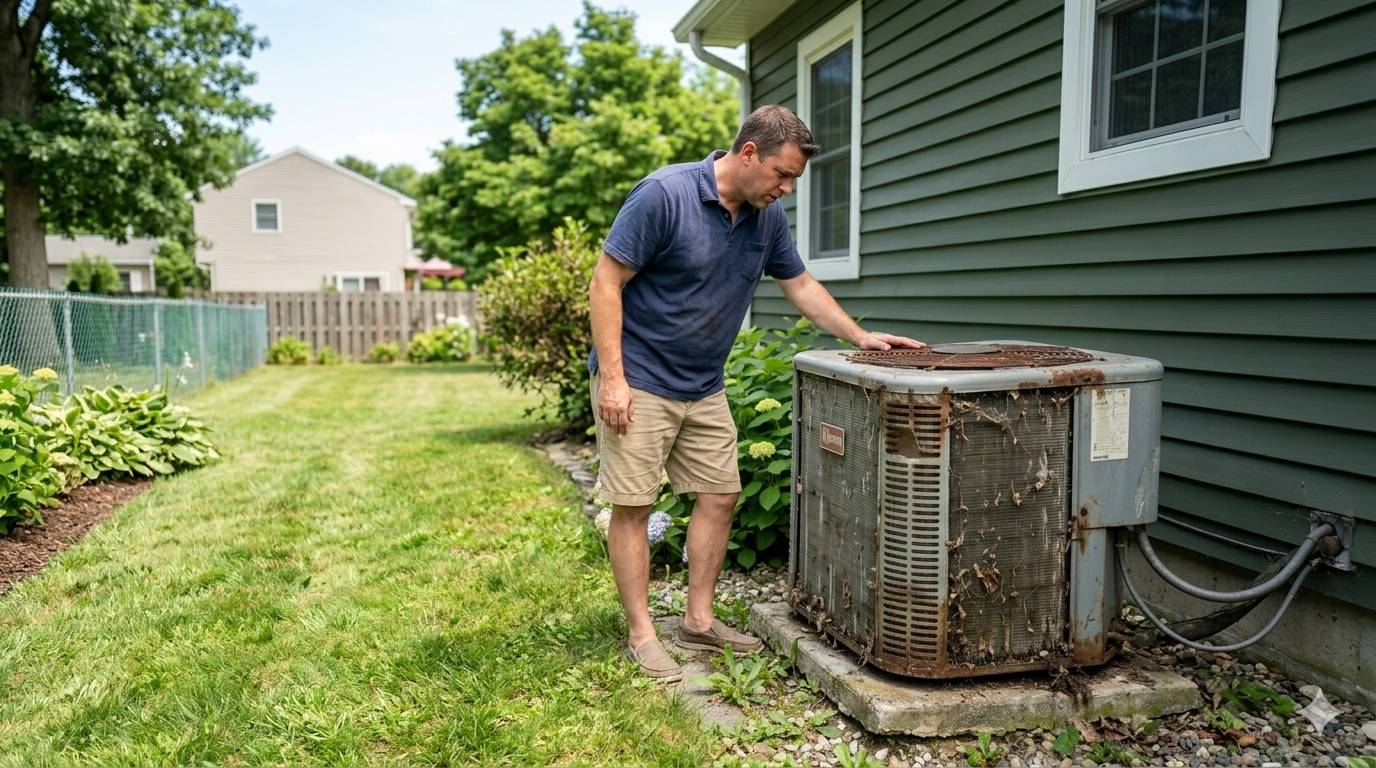
Most air conditioning systems last 12–15 years, but many homeowners wait until their system completely fails before replacing it.
Unfortunately, emergency replacements during the middle of a Suffolk County summer heat wave can be stressful and expensive.
Recognizing early warning signs can help you plan ahead.
Here are five common signs your HVAC system may be nearing the end of its lifespan.
1. Your System Is 12–15 Years Old
Age alone doesn’t mean your system must be replaced, but most air conditioners begin losing efficiency after about 12 years of use.
Older systems also tend to:
Break down more frequently
Use outdated refrigerants
Cost more to operate
If your system is approaching this age range, it may be worth exploring replacement options.
2. Frequent Repairs
Occasional repairs are normal.
But if you’re calling for service every season, those costs add up quickly.
A common rule homeowners follow:
If repair costs exceed $1,500–$2,000, replacement may be the better long-term investment.
3. Your Energy Bills Keep Increasing
Older HVAC systems lose efficiency over time.
Signs of this include:
Longer run times
Higher summer electric bills
Difficulty keeping the house cool
Newer systems are significantly more energy efficient than systems installed 15–20 years ago.
4. Uneven Cooling in Your Home
Do some rooms feel comfortable while others stay warm?
This can happen when:
Your system is undersized
Ductwork is aging
The system is struggling to keep up
A properly sized replacement system can restore consistent comfort.
5. Your AC Runs Constantly
When a system runs nearly all day during warm weather, it may be struggling to maintain temperature.
This is often a sign that the equipment is losing capacity or nearing the end of its service life.
Plan Ahead Instead of Waiting for Failure
Many homeowners wait until their system completely fails.
But planning ahead can help you:
Avoid emergency installation costs
Compare equipment options
Schedule installation at a convenient time
Get a Quick Estimate for Your Home
To help Suffolk County homeowners plan ahead, we created a simple online HVAC replacement estimator.
In less than 30 seconds, you can see a personalized price range based on your home size and system type.
👉 Try the estimator here:
Instant Estimator
How Much Does It Cost to Replace an Air Conditioner in Suffolk County? (2026 Homeowner Guide)
Wondering how much it costs to replace an air conditioner in Suffolk County? This guide explains typical HVAC replacement costs, factors that affect pricing, and how homeowners can estimate their system cost.
Homeowners on Long Island eventually face the same question:
How much does it cost to replace an air conditioner?
If your system is 10–15 years old, struggling during hot Suffolk County summers, or needing expensive repairs, replacement may be the smarter option.
This guide breaks down:
Typical replacement costs in Suffolk County
What factors affect the price
When it makes sense to replace instead of repair
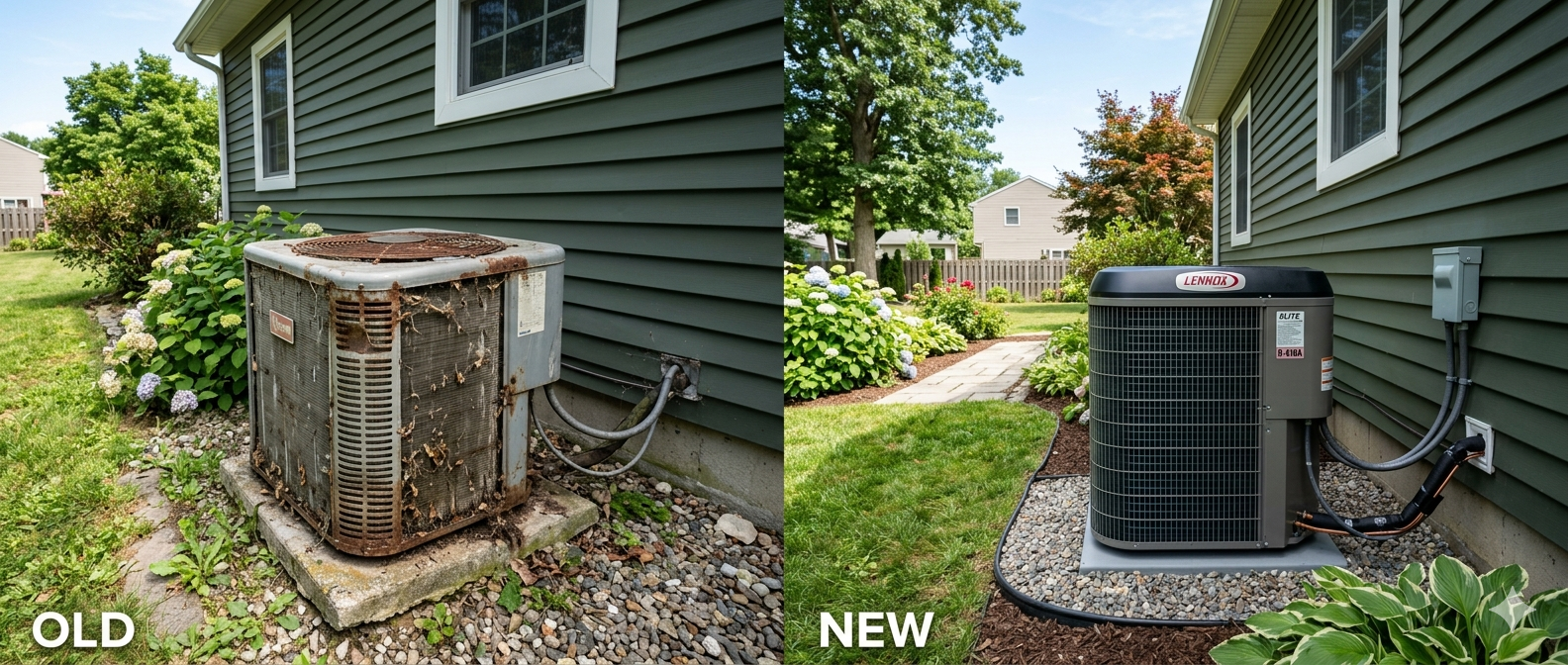
Typical AC Replacement Cost in Suffolk County
In 2026, most homeowners on Long Island spend between:
$7,500 – $16,000
for a full central air replacement.
This typically includes:
Outdoor condenser
Indoor coil or air handler
Refrigerant line connection
Electrical connections
System startup and testing
However, the final price depends on several factors.
5 Factors That Affect HVAC Replacement Price
1. Size of Your Home
Larger homes require larger systems.
Example estimates:
Home Size
Typical System Size 1000–1500 sq ft 2–2.5 ton
1500–2200 sq ft 3 ton
2200–3000 sq ft 4 ton
Proper sizing is critical for efficiency and comfort.
2. Condition of Existing Equipment
Costs may increase if:
Indoor coil needs replacement
Refrigerant line set must be replaced
Electrical disconnect needs upgrading
Condenser pad must be installed
3. System Efficiency
Higher efficiency systems cost more upfront but can reduce energy bills.
Typical options:
SEER Rating Efficiency
14–15 SEER Standard
16–18 SEER High efficiency
19+ SEER Premium systems
4. Ductwork Condition
If ductwork is damaged, leaking, or undersized, it may need modifications.
Many homes in Suffolk County have older duct systems, which can affect system performance.
5. Refrigerant Changes (2025 Regulation)
New environmental regulations are transitioning HVAC systems away from older refrigerants.
New systems use refrigerants with lower environmental impact, which can slightly affect equipment pricing.
When Should You Replace Instead of Repair?
Most homeowners consider replacement when:
The system is 12–15 years old
Repair costs exceed $1,500–$2,000
Energy bills are increasing
The home has uneven cooling
If your system is nearing the end of its lifespan, replacement can prevent emergency failures during summer heat waves.
Get an Instant Estimate for Your Home
To help Suffolk County homeowners plan ahead, we created a simple online price estimator.
In less than 30 seconds you can see a personalized price range based on your home size and system type.
👉 Try the estimator here:
The 2025 Refrigerant Change: What Homeowners Need to Know Before Replacing Their AC
Major refrigerant changes are coming to the HVAC industry. Learn how the transition to newer refrigerants like R-454B and R-32 could affect system replacements, pricing, and what homeowners should consider before upgrading their air conditioning system.
If you're considering replacing your air conditioning system in the next few years, you may have heard that major refrigerant changes are happening across the HVAC industry. Starting in 2025, manufacturers are transitioning away from the refrigerant used in most current systems and introducing newer, more environmentally friendly alternatives.
For homeowners, this change raises an important question:
Should you replace your system before or after the refrigerant transition?
Here's what you need to know.
Why Refrigerants Are Changing
Air conditioners and heat pumps rely on refrigerants to move heat and cool your home. Over time, regulations have required the industry to move toward refrigerants with lower environmental impact.
Many homeowners remember the phase-out of R-22 refrigerant, which was used in older systems before being replaced by R-410A.
Now, the industry is entering another transition. New environmental standards are encouraging the adoption of lower Global Warming Potential (GWP) refrigerants, which reduce environmental impact while still providing efficient cooling.
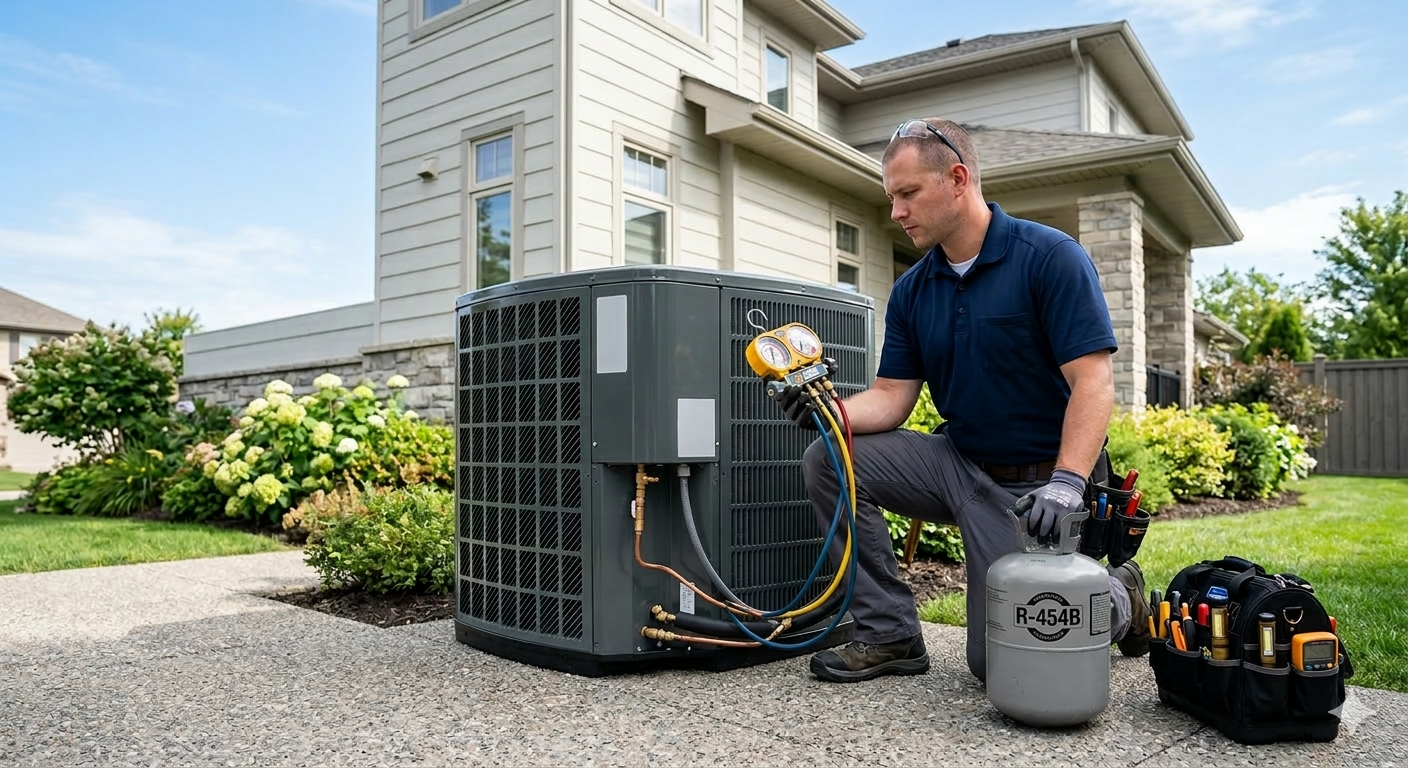
As a result, HVAC manufacturers are transitioning to refrigerants such as:
R-454B
R-32
These refrigerants will become the new standard for many residential systems moving forward.
What Refrigerant Your Current System Probably Uses
Most homes fall into one of three categories.
Older systems (15+ years old)
These systems often use R-22 refrigerant, which is no longer produced in the United States. Repairs involving refrigerant can be expensive because supply is limited.
Systems installed between roughly 2010–2024
Most of these systems use R-410A refrigerant, which has been the industry standard for over a decade.
New systems going forward
Many new HVAC systems will begin transitioning to refrigerants like R-454B or R-32, which meet updated environmental guidelines.
What the 2025 Refrigerant Transition Means for Homeowners
The refrigerant transition mainly affects new equipment manufacturing, not the systems already installed in homes.
If your system uses R-410A, it will still be serviceable for years to come. However, as manufacturers transition to new equipment designs, the industry will gradually move toward the newer refrigerants.
For homeowners considering replacement, this creates a timing decision.
Should You Replace Your System Before the Change?
For many homeowners, the best time to replace a system is simply when the current system becomes unreliable or inefficient.
However, there are a few situations where replacing sooner may make sense:
Your system is 12–15+ years old
Repairs are becoming frequent
Your energy bills continue increasing
Your home struggles to maintain comfortable temperatures
In these cases, upgrading to a modern high-efficiency system can improve comfort, reliability, and operating cost.
The key is making a planned replacement decision rather than waiting for an emergency breakdown in the middle of summer or winter.
Will HVAC Prices Change?
Industry transitions sometimes affect equipment pricing, but costs depend on many factors including:
System size
Efficiency level
Ductwork condition
Electrical upgrades
Installation complexity
Because every home is different, the best way to understand replacement costs is to evaluate the system based on your home's size, layout, and existing equipment.
The Bottom Line
The refrigerant transition is simply another step in the HVAC industry's evolution toward more environmentally responsible technology.
For homeowners, the most important factors remain the same:
system age
reliability
energy efficiency
comfort in the home
If your system is nearing the end of its lifespan, planning a replacement before it fails can help avoid costly emergency situations and ensure your home stays comfortable year-round.
Thinking About Replacing Your HVAC System?
If you're curious what a new system might cost for your home, you can start with a quick estimate.
Use our online HVAC estimate tool to get a fast pricing range based on your home's size and current system.
It only takes a minute and can help you understand your options before scheduling a full evaluation.